
Hey folks, welcome back to GadgetWallah.com! Let’s be real – we’ve all been there. You’re out, your phone hits 5%, and that sinking feeling starts. You scramble for a café with an outlet or beg a stranger for a charger. Not a great look.
That’s why I’ve been testing portable chargers for years. And the name that always pops up is Anker. They’re like the Amitabh Bachchan of power banks – legendary, reliable, everywhere. But is the hype real? I bought one of their best-selling models, the Anker 335 Power Bank (PowerCore 20K), and used it as my daily driver for over a month. No marketing fluff, just my honest experience.
First Impressions- It’s All About That Feel
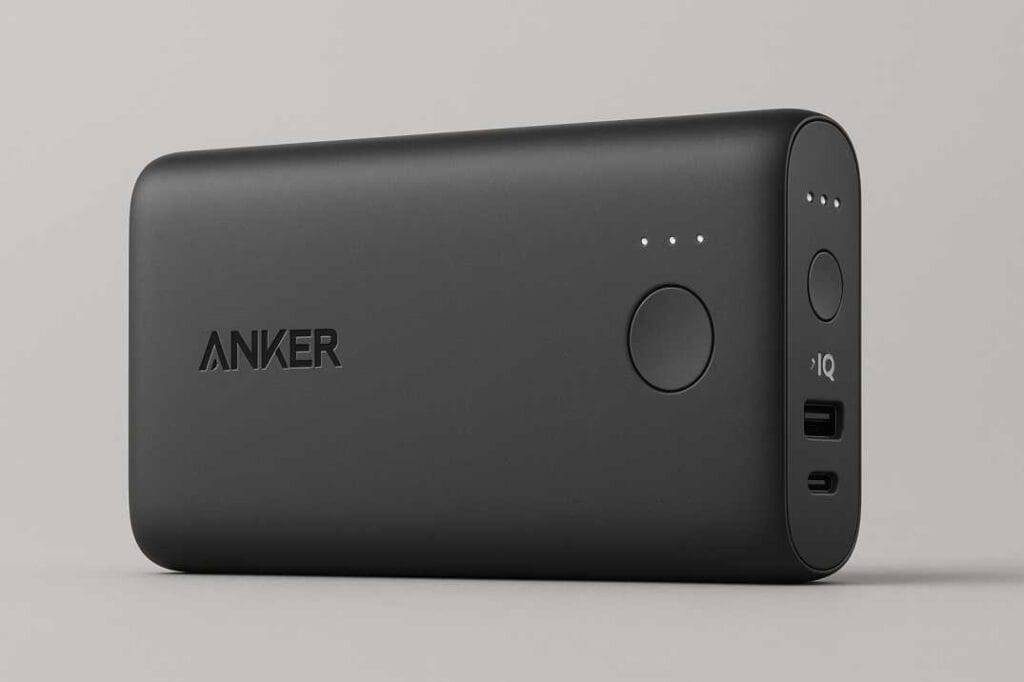
Right out of the box, the first thing I noticed was the build. This Anker portable charger doesn’t feel cheap. It has a matte, slightly textured finish that doesn’t slip out of your hand or attract fingerprints like a magnet. It’s compact—fits in my palm—but has a satisfying heft. You can tell the battery inside is substantial. The ports (two USB-As and a USB-C) feel solid, not wobbly. A good start.
The Real-World Test- From Mumbai Local to Road Trip
I didn’t just charge my phone on my desk. I threw this battery pack into my bag during my daily Mumbai local commute, took it on a weekend road trip, and even used it during a long, power-cut-ridden evening.
- The Capacity Truth (20,000mAh) – The advertised capacity sounds great, but what does it mean? For me, with my iPhone 14, it meant about 4.5 full charges. For my friend’s power-hungry Android phone, it gave around 3.5 charges. This is the real win. I left for a two-day trip without my wall charger. Just this brick and a cable. Zero battery anxiety. That’s freedom.
- Charging Speed – Fast or Just Hype? – It supports PowerIQ, which is Anker’s fancy term for “it figures out the best fast-charging protocol for your device.” I tested it with an iPhone, a Samsung, and a Pixel. While it won’t match the super-fast speeds of a dedicated 65W laptop charger, it’s consistently quick and smart. My iPhone went from 10% to 60% in under an hour while I was still using it for maps. No complaints.
- The Hidden Hero: Recharging Itself – This was a surprise. Using a decent 18W wall adapter, the Anker power bank itself recharged from empty to full in just about 5.5 hours. Some cheaper banks take 10-12 hours! This is a massive practical benefit. I could top it up overnight and it’s ready by morning.
Living With It- The Good & The Not-So-Good
No gadget is perfect. Here’s my unbiased breakdown.
Pros
- Reliability is King– It just works. Every single time. No heating up, no shutting off randomly at 30%.
- Pocket-Friendly Power– The size-to-power ratio is excellent. It’s a true travel companion.
- Multi-Device Charging– Two phones and a pair of TWS earbuds simultaneously? Done.
- Value for Money– In my experience, you pay a bit more than no-name brands, but for build quality and peace of mind, it’s worth every rupee.
Cons
- No Built-in Cable– I wish it had a little built-in USB-C or Lightning cable for true grab-and-go convenience. You have to remember your own cable.
- It’s Not Feather-Light– For its capacity, it’s well-built, but if you’re looking for an ultra-lightweight charger for just top-ups, this might feel hefty.
- No Fast Charging Display– It has four tiny LED dots for battery level. I’d prefer a digital percentage display, but that’s a minor gripe.
Who Should (and Shouldn’t) Buy This Anker Power Bank?
Buy it if You travel frequently, commute long hours, are a heavy phone user, or just want one reliable power bank that will last for years without fuss. It’s the best power bank for travel in this capacity range, hands down.
Skip it if: You only need occasional top-ups and want the absolute smallest, lightest pack. Or if you need blindingly fast 65W+ charging for a laptop.
My Final Verdict
After a month of real use, I get the hype. The Anker 335 Power Bank isn’t the flashiest or the cheapest. But it embodies what most of us actually need from a portable charger: dependability. It’s the gadget equivalent of that trusted friend who always shows up. It won’t let you down when you’re at 1%, searching for an auto-rickshaw at midnight.
For me, the trade-off of a slightly higher price for this level of reliability is a no-brainer. It has earned a permanent spot in my everyday carry bag.
Frequently Asked Questions (FAQs)
Q1. Can I carry this Anker power bank on a plane?
A. Absolutely. This 20,000mAh model is well under the typical 27,000mAh (100Wh) limit for carry-on luggage set by most airlines, including Air India and international carriers. I’ve carried it on multiple flights without issue.
Q2. How long does it last before the battery degrades?
A. In my experience with Anker products, they hold up well. Anker uses quality cells. With regular use, you can expect 2-3 years of good performance before you might notice a drop in total capacity. It also has surge protection and other safety features to prolong its life.
Q3. Does it support fast charging for Samsung/OnePlus phones?
A. Yes, but with a caveat. Its PowerIQ technology supports many fast-charging protocols (like Samsung’s Adaptive Fast Charging). However, for the absolute fastest charging like OnePlus Warp Charge, you need a charger and cable specifically designed for that protocol. It will still charge them quickly, just not at the peak proprietary speed.
Q4. What’s the best way to maintain this portable charger?
A. Simple tips: Try not to drain it to 0% all the time. Recharge it before it completely dies. Store it in a cool, dry place (not in a hot car!). And use a good quality cable – a frayed cable can damage any power bank.
Pingback: The iPhone 14 in 2025, Still a Smart Buy or a Stone-Age Relic? My Honest Take - Gadget Wallah