
Let me be honest with you. As someone who tests dozens of gadgets a year, I’ve seen my fair share of wireless chargers. Most end up in a drawer, forgotten. They were finicky, requiring perfect alignment, and frustratingly slow. Then came Apple’s MagSafe wireless charger. The first time I snapped my iPhone onto one, it wasn’t just a connection; it was a satisfying click of everything finally working as it should. No more fumbling in the dark. No more “is it charging?” anxiety. It felt like the future.
But here’s the catch: the market is now flooded with options. From Apple’s own official puck to a plethora of third-party stands, car mounts, and power banks, choosing the right MagSafe wireless charger can be overwhelming. Is the Apple one worth the premium? Which third-party brand is reliable? Does it work with Android phones?
This guide is designed to cut through the noise. We’ll dive deep into what makes MagSafe different, compare the top models available to Indian consumers, and give you the clarity you need to make a smart purchase. Whether your intent is to learn, compare, or buy, consider this your one-stop resource.
What is MagSafe? It’s More Than Just a Magnet
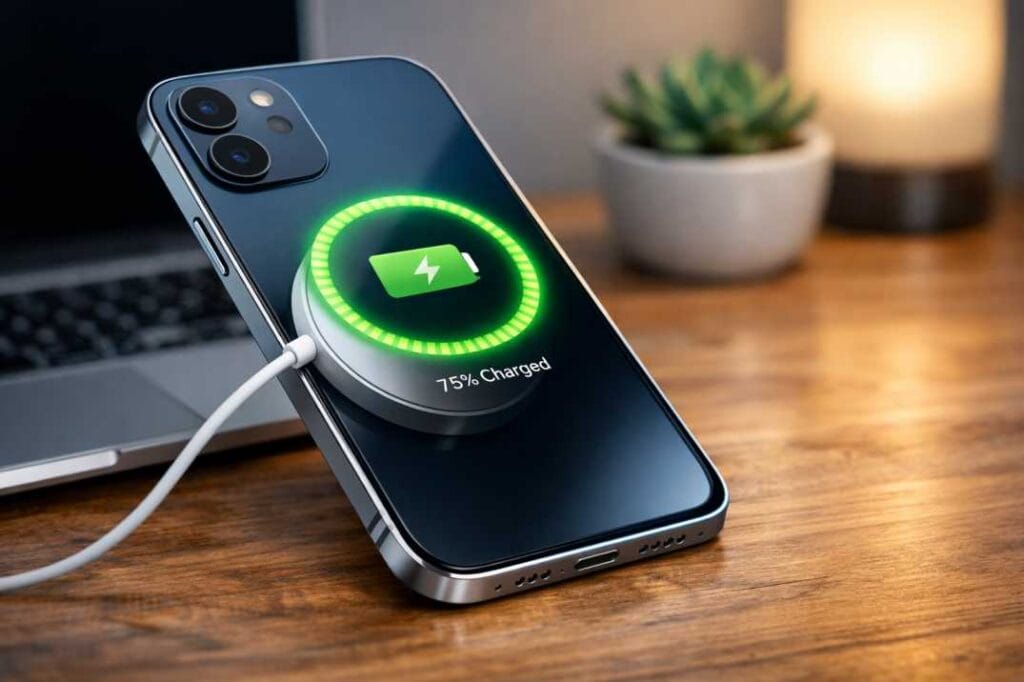
First, a quick clarification. The MagSafe wireless charger is not a single product. MagSafe is a technology standard introduced by Apple for iPhones, starting with the iPhone 12 series and continuing through the latest models. At its core, it’s a system of perfectly aligned magnets built into the back of the iPhone and a corresponding ring of magnets in MagSafe-certified accessories.
This magnetic ring does two brilliant things:
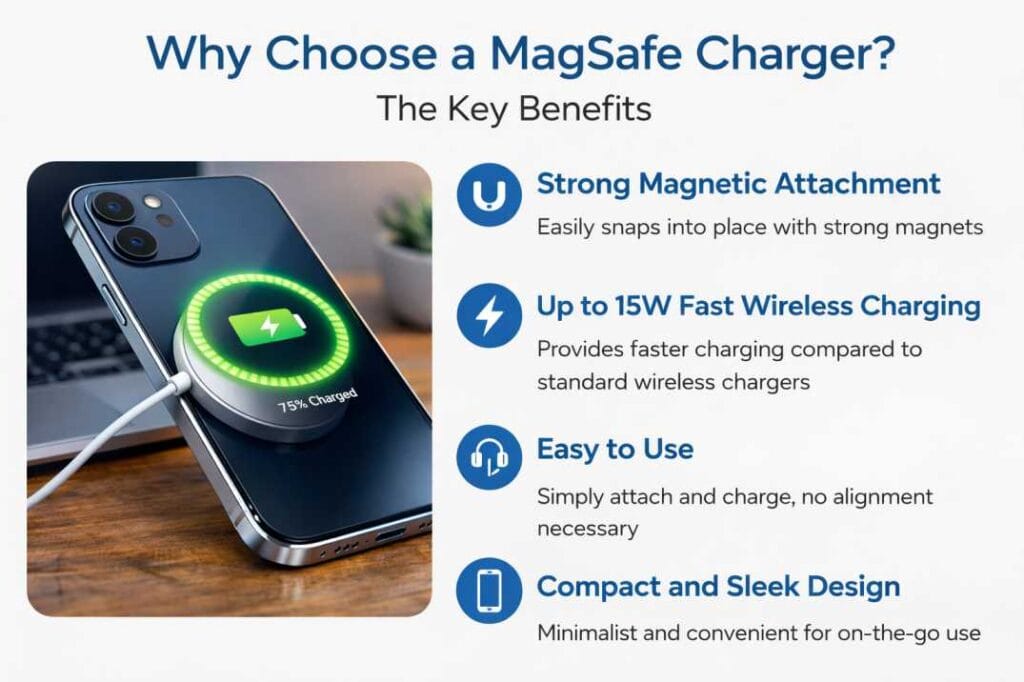
- Instant, Perfect Alignment: It automatically snaps the charger into the perfect position for optimal wireless charging speed (up to 15W for compatible iPhones). This is the game-changer.
- A New Ecosystem: It creates a secure physical connection, enabling a whole new class of accessories like wallets, grips, and mounts that won’t slip off.
It’s essential to distinguish between Made for MagSafe (MFM) and MagSafe-Compatible accessories. MFM products are certified by Apple, guaranteeing the correct magnet strength, alignment, and 15W charging performance (if supported). MagSafe-Compatible products have magnets and will attach, but may not deliver the full 15W speed and aren’t Apple-certified.
Why Choose a MagSafe Charger? The Key Benefits
f you’re coming from standard Qi wireless charging, the advantages are substantial:
- Unmatched Convenience: The magnetic snap is intuitive and fast. It’s perfect for bedside charging—you can grab your phone in the dark and easily place it back.
- Faster Charging Speeds: A certified MagSafe wireless charger can deliver up to 15W to supported iPhones, compared to the slower 7.5W on standard Qi chargers. It’s not as fast as a wired 20W+ PD charger, but it’s the fastest wireless option for iPhone.
- Multi-Tasking Ability: Because it’s securely attached, you can continue using your phone while it charges on a stand, making it ideal for video calls, following recipes, or as a desk clock.
- Enables Other Accessories: The magnet isn’t just for charging. It opens the door to a seamless ecosystem. You can attach a MagSafe battery pack for extra juice on the go, or use a MagSafe car mount that’s both a charger and a secure holder.
Crucial Specifications to Understand Before Buying
Don’t just buy based on looks. Pay attention to these specs:
- Charging Speed (Wattage): The headline figure. For full 15W speed, you need three things: an iPhone 12 or newer, a 20W (or higher) USB-C Power Delivery adapter, and a Made for MagSafe certified charger. Many third-party chargers max out at 7.5W or 10W.
- Power Adapter Requirement: This is the most common oversight. A MagSafe charger does NOT include a wall plug. You must use a separate USB-C power adapter rated at 20W or higher (like Apple’s 20W USB-C plug) to achieve 15W speeds.
- Cable Length & Type: Most pucks come with a 1-meter USB-C to MagSafe cable. For desk or bedside use, consider if you need a longer cable or a charger with a built-in, non-removable cord.
- Thermal Management: Good chargers have built-in safeguards to prevent overheating, which can throttle charging speed and degrade your phone’s battery over time. Look for mentions of “thermal design” or “foreign object detection.”
Head-to-Head: Top MagSafe Chargers Compared
Let’s put the most popular options on a virtual bench. Here’s a detailed comparison to simplify your decision.
| Feature | Apple MagSafe Charger | Belkin BoostCharge Pro 2-in-1 | Anker MagGo 633 (MagSafe Battery) | Spigen ArcField Mag |
|---|---|---|---|---|
| Type | Basic Charging Puck | Stand + Watch Charger | Power Bank / Charger | Charging Stand |
| Max iPhone Power | 15W (MFM Certified) | 15W (MFM Certified) | 7.5W (as battery) / 15W (as charger) | 15W (MFM Certified) |
| Key Feature | Official Apple product, minimalist | All-in-one for iPhone & Apple Watch | Portable 10,000mAh battery with stand | Sturdy, adjustable angle stand |
| Best For | Purists, travel, simple setup | Apple ecosystem users, nightstand | Travelers needing all-day power | Desk users, video calls |
| Approx. Price (INR) | ₹4,500 | ₹7,999 | ₹6,999 | ₹4,199 |
| Pros | Guaranteed performance & safety, compact. | Clean, certified, convenient 2-device charge. | Incredibly versatile, great for travel. | Solid build, good viewing angles. |
| Cons | Expensive, no stand, needs separate adapter. | Very expensive, bulky. | Heavy as a battery, slower 7.5W on-the-go. | Requires own 20W adapter. |
Deep Dive Analysis:
- The Official Choice (Apple MagSafe Charger): It’s the benchmark. You’re paying for guaranteed compatibility, safety, and that seamless Apple experience. However, its flat design means you can’t easily see notifications while charging—a major drawback for many.
- The Ecosystem King (Belkin BoostCharge Pro): If you own an Apple Watch, this is a supremely convenient nightstand solution. It’s pricey, but it consolidates two chargers into one, reducing cable clutter. Belkin is a trusted Apple partner, so quality is top-notch.
- The Travel Powerhouse (Anker MagGo 633): This is a uniquely versatile product. At home, it’s a 15W MagSafe wireless charger stand. Unplug it, and it becomes a magnetic power bank that snaps to your phone. Anker’s reputation for reliable electronics makes this a compelling choice for the mobile professional.
- The Value Stand (Spigen ArcField Mag): Spigen offers certified MagSafe performance in a well-built, adjustable stand at a significantly lower price than Belkin. It’s an excellent “set it and forget it” desk charger.
Best MagSafe Charger for Different Needs
Your lifestyle should dictate your choice.
- For the Desk Warrior: A MagSafe charging stand is non-negotiable. The Spigen ArcField Mag offers great value, while the Belkin BoostCharge Pro is the premium pick if you also have an Apple Watch. The angled design is perfect for FaceTime, Duo calls, or using StandBy mode in iOS.
- For the Frequent Traveler: Portability is key. The Apple MagSafe Charger puck is the lightest and slimmest. For extreme power needs, the Anker MagGo 633 battery/charger combo is a lifesaver, eliminating the need to hunt for outlets.
- For the Car: You’ll want a dedicated MagSafe car vent or dash mount. Look for models that offer strong clamping force (like from ESR or Belkin) and ensure they mention 15W fast charging if your car’s outlet can support it.
- For the Budget-Conscious Buyer: Several Indian and international brands like ESR, Spigen, and Baseus offer excellent MagSafe-Compatible (not always MFM) chargers that provide the magnetic snap and decent 7.5W-10W charging at a fraction of the cost. Just temper your speed expectations.
Common Pitfalls & What to Avoid
A few words of caution from my testing experience:
- Thick or Metal Cases: MagSafe works through cases, but only if they are MagSafe-compatible. Thick cases or those with metal rings will block the connection. Look for the MagSafe animation on your iPhone screen when you attach the charger; if you don’t see it, the case is likely the culprit.
- Ignoring the Power Adapter: I’ll say it again. Buying a 15W MagSafe wireless charger and pairing it with an old 5W or 10W plug will result in painfully slow charging. Invest in a good 20W USB-C PD adapter.
- Overheating on Cheap Chargers: Uncertified, ultra-cheap chargers from unknown brands can lack proper thermal regulation. This can cause your iPhone to heat up excessively, leading to slowed charging and potential long-term battery damage.
- Expecting Android Speed: Android phones like Samsung Galaxy devices can attach to MagSafe chargers (often with a compatible case), but they will charge at standard Qi speeds (usually 5W-10W). They don’t support Apple’s 15W MagSafe protocol.
FAQs About MagSafe Wireless Chargers
Q: Do all iPhones work with MagSafe chargers?
A: Only iPhone 12 series and newer have the built-in MagSafe magnet array. Older iPhones (11, XS, etc.) can charge on a MagSafe puck as a standard Qi charger, but without the magnetic snap and at slower speeds (7.5W max).
Q: Can a MagSafe charger damage my iPhone’s battery?
A: No more than any other quality wireless charger. Apple’s software (Optimized Battery Charging) and hardware safeguards in certified chargers manage heat and charging patterns to minimize wear. The main risk to battery health is consistent exposure to high heat from poor-quality chargers.
Q: Is a MagSafe charger slower than a wired charger?
A: Yes. A 20W+ USB-C wired charger is faster than a 15W MagSafe charger. MagSafe prioritizes convenience over absolute speed. A 30-minute wired charge will give you more battery than a 30-minute MagSafe charge.
Q: Are third-party MagSafe chargers safe?
A: Made for MagSafe (MFM) certified third-party chargers from reputable brands like Belkin, Anker, Spigen, and ESR are perfectly safe. They meet Apple’s safety and performance standards. Be wary of no-name, uncertified brands.
Final Verdict: Is a MagSafe Charger Right for You?
The MagSafe wireless charger ecosystem represents a meaningful step forward in convenience. The magnetic snap transforms wireless charging from a finicky guessing game into a reliable, one-handed action.
You should buy one if: You own an iPhone 12 or newer, value convenience and a clean setup, and are willing to invest in the Apple ecosystem. A good MagSafe charging stand for your desk or bedside is arguably the most impactful way to use this tech.
You might skip it if: You are on a very tight budget and speed is your only priority (stick with wired), or if you use a thick, non-MagSafe case and don’t wish to change it.
For most modern iPhone users, the experience is worth the entry price. Start with a well-reviewed stand or puck from a certified brand. Feel that satisfying snap, and you’ll quickly understand why so many of us can’t go back.
What’s your top priority in a wireless charger: Speed, Convenience, or Multi-tasking ability? Let us know in the comments below—we’d love to hear what you look for!