
I used to think noise machines were a gimmick.
You know, the kind of thing your aunt buys from a home shopping channel and then never uses. I figured if I needed silence, I’d just use earplugs. End of story.
Then I moved into an apartment with paper-thin walls.
My neighbor worked the night shift. Every morning at 3:45 AM, his truck would rumble to life, and I’d be wide awake—staring at the ceiling, doing the mental math of how much sleep I had left (spoiler: not enough).
I tried earplugs. They hurt my ears and I slept through my own alarm.
I tried a fan. Too cold in winter.
I tried my phone with a white noise app. Worked okay, but my phone battery was dead by morning, and I’d wake up to a black screen and no alarm.
So I did what any mildly desperate person does: I went down a rabbit hole of best noise machines for sleep. I ordered a bunch. Returned most. Kept a few.
What I learned changed how I sleep. Let me save you the trial and error.
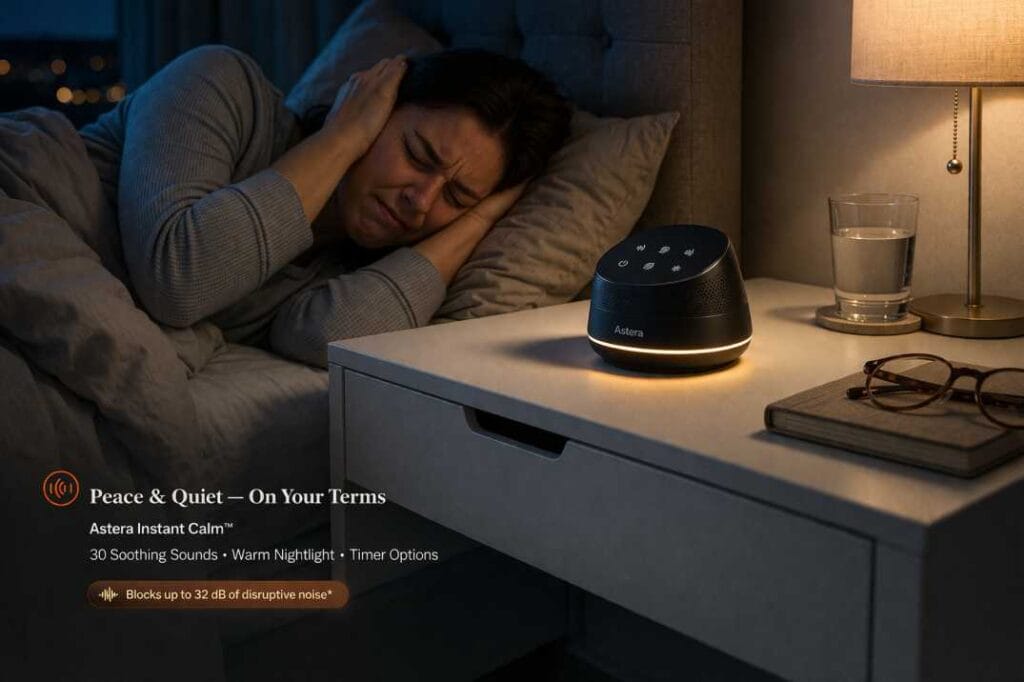
Why a Dedicated Noise Machine Beats Your Phone (Or a Fan)
Before we get into the specific models, let’s address the elephant in the room: why not just use an app?
I used an app for a year. Here’s why I switched:
- Battery anxiety. If I plugged my phone in, the speaker was usually facing down and muffled. If I didn’t, I’d wake up with 10% battery and no alarm safety net.
- Screen glow. Even with Do Not Disturb, the screen would occasionally light up with notifications, and I’m a light sleeper. Any flicker wakes me.
- Inconsistent sound. Apps sometimes glitch, cut out, or get interrupted by calls. A dedicated machine just… runs. All night. No surprises.
A fan works, sure, but it’s seasonal. Plus, fans create uneven sound—the blades click, the motor hums weirdly, and if you live somewhere cold, you’re freezing for the sake of white noise.
A good noise machine gives you consistent, non-looping sound (no jarring repeat every 30 seconds) and often includes multiple sound profiles so you can find what actually masks your specific noise.
The 4 Types of Noise Machine Buyers (And Which One You Are)
Not everyone needs the same thing. Here’s how I break it down:
1. The Light Sleeper (apartment dweller, thin walls)
Needs powerful, deep sound to mask unpredictable noises like voices, footsteps, or trucks.
2. The Couple (snoring partner)
Needs something that can cover low-frequency snoring without being too shrill. Usually requires a machine with a dedicated “brown noise” or “pink noise” setting.
3. The Traveler (hotels, shared rooms)
Needs portable, battery-powered, and small. Bonus if it doubles as a Bluetooth speaker.
4. The Parent (nursery)
Needs safe, simple operation, dimmable lights, and a sound that soothes without overstimulating. Often used with a timer.
I’ve tested machines for all four categories. Here’s what rose to the top.
The 5 Best Noise Machines I Tested (And One I Almost Kept)
I won’t bore you with the 7 that went back to Amazon. These are the five that survived the purge.
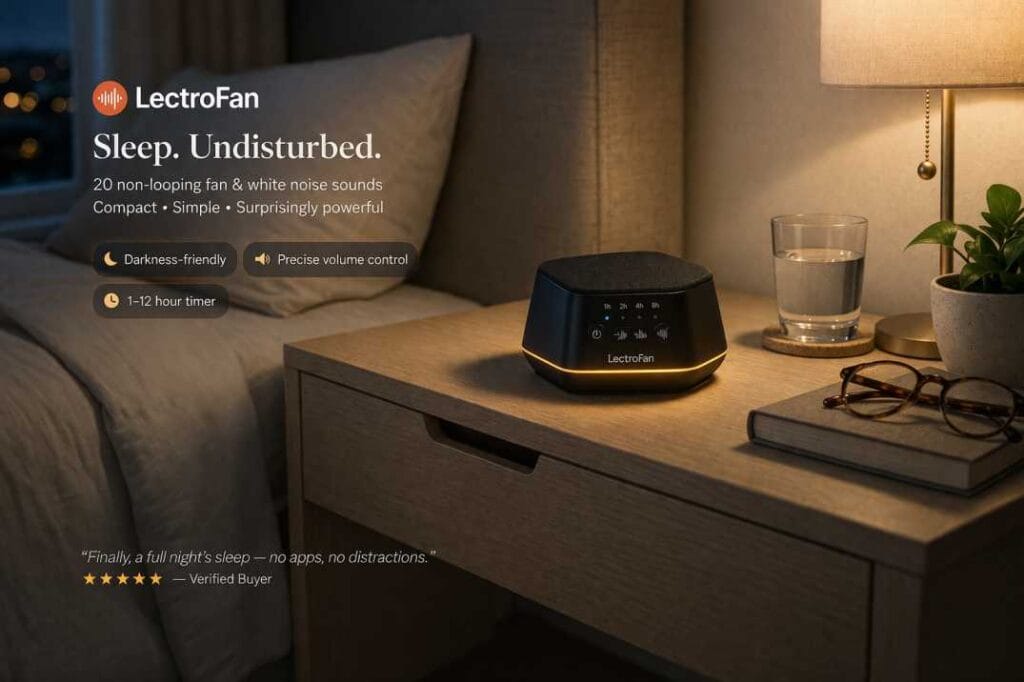
1. LectroFan High-Fidelity White Noise Machine (Best Overall)
This is the one I recommend to almost everyone.
The LectroFan doesn’t play nature sounds. It doesn’t have a Bluetooth speaker. It does one thing: it generates non-looping fan sounds and white noise variants using a physical sound engine, not a recording.
Why that matters? Because with a recording, you eventually hear the loop. It might take 20 seconds or 2 minutes, but your brain catches it. The LectroFan’s sound is infinite—no repeats. It’s like having a fan in your room without the breeze.
Pros:
- 20 unique sounds (white, pink, brown, and fan noises)
- No moving parts—nothing to wear out
- Small enough to travel with
- Volume range is massive; can get loud enough for heavy snoring
Cons:
- No battery option (must be plugged in)
- Only physical buttons, no app control
- The design is… functional, not beautiful
Best for: Anyone who wants reliable, high-quality white noise without gimmicks.
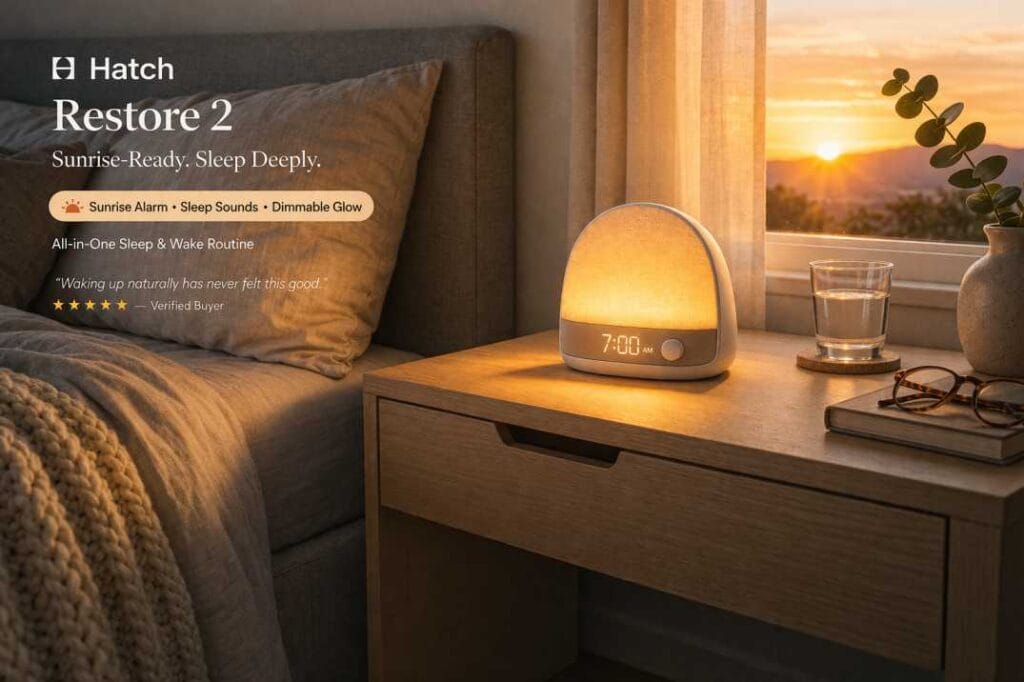
2. Hatch Restore 2 (Best for Smart Features & Morning Routine)
This one is expensive. I hesitated to include it because of the price ($170+). But after using it for six months, I get it.
The Hatch Restore 2 is part noise machine, part sunrise alarm clock, part sleep tracker. You set a “sleep routine” and a “wake routine.” At bedtime, it plays your chosen sound (brown noise for me) and dims to a warm red light. In the morning, it slowly brightens with a sunrise effect before playing a gentle alarm.
Pros:
- Combines sound + light therapy
- Sleek design that doesn’t look like medical equipment
- Customizable via app; you can schedule everything
- Dimmable clock display (a huge plus for light-sensitive sleepers)
Cons:
- Expensive
- Requires Wi-Fi and app setup (overkill for some)
- The sounds are streamed; if Wi-Fi goes out, you lose your sleep sound (though there’s a backup offline sound)
Best for: People who want an all-in-one sleep system and are willing to invest.
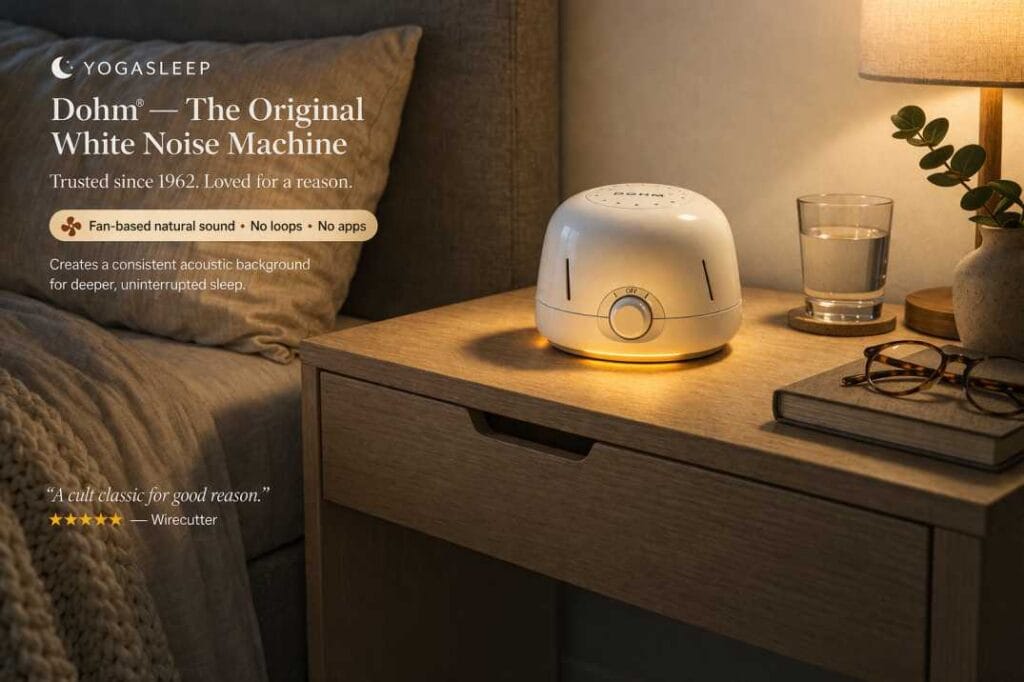
3. Yogasleep Dohm Classic (Best Mechanical Fan Sound)
The Dohm is the original noise machine. It’s been around for decades, and for good reason.
Unlike the LectroFan (which is electronic), the Dohm uses a physical fan inside with adjustable vents. You twist the housing to change the tone and volume. It produces a natural, organic white noise that feels like a gentle breeze.
Pros:
- Simple to use—no buttons, just a twist
- Natural, non-looping sound (it’s a real fan, not a recording)
- Durable; I’ve seen these last 10+ years
Cons:
- Only one sound (white noise fan)
- Can’t get as loud as electronic units
- The “fan inside” design means it can get dusty over time
Best for: Minimalists who want a simple, tried-and-true solution.
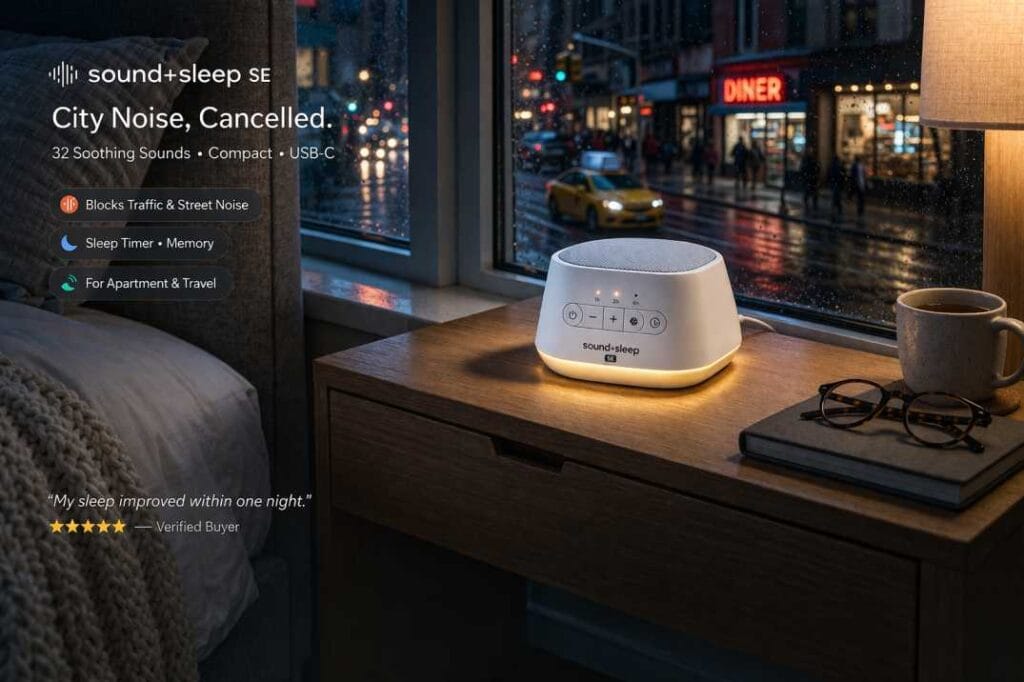
4. Sound+Sleep SE (Best for Sound Variety & Masking Power)
This is the beast of the group. The Sound+Sleep SE is big, a little ugly, but ridiculously powerful.
It has over 64 sounds, and the magic is its “Adaptive Sound” feature. It has a microphone that listens to your room noise and automatically adjusts the output to mask disruptions. If a car drives by, the machine gets slightly louder to cover it, then eases back down.
Pros:
- Massive sound library (including nature sounds with birds, rain, etc.)
- Adaptive masking is legit—works well for unpredictable noise
- Headphone jack and aux input
- Can run on batteries (though it eats them)
Cons:
- Bulky—not travel-friendly
- Interface is dated (tiny screen, fiddly buttons)
- Expensive ($130+)
Best for: People dealing with chaotic, unpredictable noise (loud neighbors, city traffic).
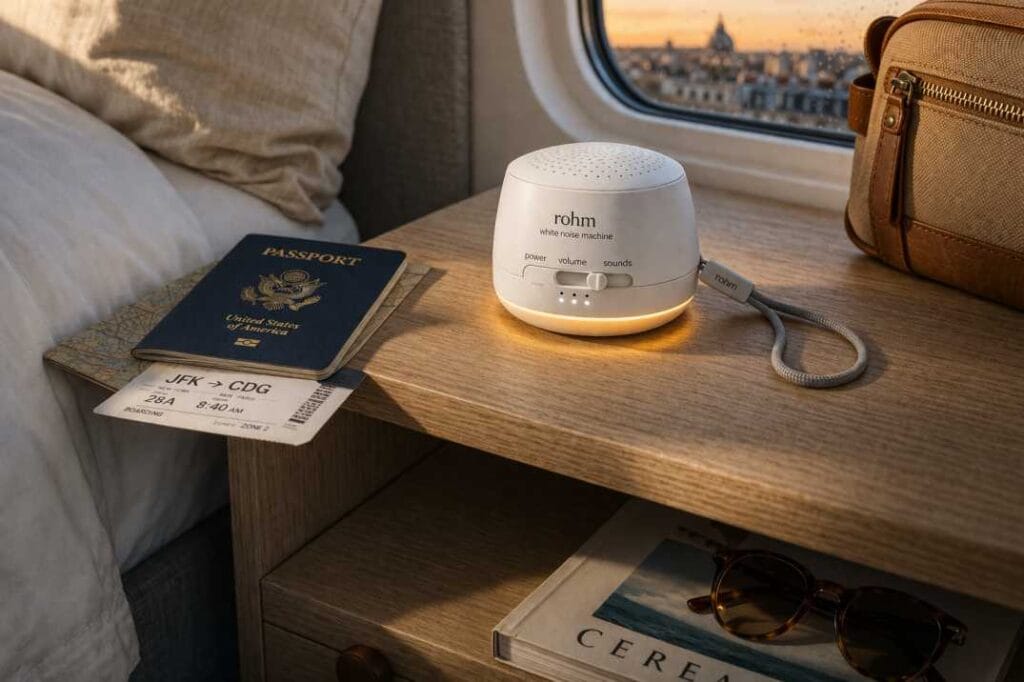
5. Rohm Portable White Noise Machine (Best for Travel)
If you travel, this is the one.
The Rohm is tiny—fits in your palm—and runs on USB or a built-in rechargeable battery. It offers three sounds (white, pink, brown) and has a surprisingly good speaker for its size.
I toss this in my carry-on and use it in hotels to mask hallway noise. It’s also great for co-sleeping with a partner who snores when you’re away from home.
Pros:
- Rechargeable battery (up to 30 hours)
- Tiny and lightweight
- Can be used plugged in or portable
- Affordable ($30–40)
Cons:
- Sound quality is good but not as rich as larger units
- Only three sounds
- Volume range is limited; not great for heavy snoring
Best for: Travelers, office privacy, or a second unit for a nursery.
Comparison Table: Noise Machines at a Glance
| Model | Type | Best Feature | Volume | Portability | Price Range |
|---|---|---|---|---|---|
| LectroFan | Electronic | Non-looping sound | Very loud | Good (small, needs plug) | $$ |
| Hatch Restore 2 | Smart | Sunrise alarm + app | Medium | No (fixed nightstand) | $$$ |
| Yogasleep Dohm | Mechanical | Natural fan sound | Medium | Medium (small but needs plug) | $ |
| Sound+Sleep SE | Electronic | Adaptive masking | Very loud | No (bulky) | $$$ |
| Rohm | Portable | Rechargeable battery | Medium-low | Excellent | $ |
What to Look For When Buying a Noise Machine
After testing all these, here are the features that actually matter.
Sound Quality & Looping
The most important thing. If you hear a loop, it’s distracting. Look for machines that use non-looping or long-loop sounds. The LectroFan and Dohm are best for this.
Volume Range
If you’re masking a snoring partner or street noise, you need a machine that can get loud. The LectroFan and Sound+Sleep SE have the highest max volume.
Portability
If you travel often, battery power is a game-changer. The Rohm is my go-to. Some people also like the LectroFan Micro (another travel option).
Light & Display
Some machines have bright LED displays that can disrupt sleep. I prefer units with dimmable displays or no display at all. The Hatch Restore 2 and LectroFan are good here.
Sound Options
Do you prefer white noise, pink noise, brown noise, or nature sounds? Brown noise is deeper and masks low-frequency sounds (snoring) better. Pink noise is a middle ground. White noise is the classic. Some machines offer all three.
Real Talk: Does Brown Noise Actually Work Better?
I didn’t believe the hype until I tried it.
White noise is high-frequency, like static. Brown noise is deeper—think heavy rainfall or a distant jet engine. For me, brown noise masks my neighbor’s low-frequency truck rumble way better than white noise.
If snoring is your problem, brown noise is your friend. Most machines now include it, but if you’re buying a cheaper model, double-check.
FAQs About Noise Machines
Q: Can I leave a noise machine on all night?
Absolutely. Most are designed for continuous use. I’ve run my LectroFan every night for two years without issue. Just make sure it has proper ventilation if it’s a fan-based model like the Dohm.
Q: Are noise machines safe for babies?
Yes, but with precautions. Keep the machine at least 3–4 feet from the crib and at a low to medium volume. The American Academy of Pediatrics recommends not exceeding 50 decibels for nursery use. Some machines, like the Hatch Rest (baby version), have built-in volume limits.
Q: What’s the difference between white, pink, and brown noise?
White noise has equal intensity across all frequencies (sounds like TV static). Pink noise emphasizes lower frequencies (like steady rain). Brown noise (or red noise) emphasizes even deeper frequencies (like a rumbling thunderstorm). Brown noise is often best for blocking low-frequency sounds.
Q: Do noise machines work for tinnitus?
Many people with tinnitus use noise machines for masking. The key is finding a frequency that covers your specific tinnitus pitch. Machines with adjustable tone controls (like the Sound+Sleep) are better for this.
Q: Can I use a Bluetooth speaker instead?
You can, but you’ll run into the loop problem unless you stream a non-looping track. Also, most speakers don’t have a “sleep timer” that keeps them playing all night without pausing. Dedicated machines are simpler and more reliable.
Final Verdict: What I Actually Use
After all that testing, here’s my current setup:
- At home: LectroFan. Simple, loud, infinite sound. It’s on my nightstand every night.
- For travel: Rohm. Fits in my dopp kit and saves me from noisy hotel neighbors.
- For mornings: I don’t use the Hatch Restore 2 anymore—it was great, but I realized I don’t need a sunrise alarm. If you struggle with waking up in the dark, though, it’s worth every penny.
If I had to pick just one for most people, it’s the LectroFan. It’s not fancy, but it does the one thing that matters better than almost anything else: it helps you sleep through noise.
About the Author
Alex Torres has been testing consumer tech for over a decade. A lifelong insomniac turned sleep enthusiast, he’s tried everything from weighted blankets to $500 mattresses. He currently lives in Austin, Texas, where he’s still fighting with his neighbor’s truck—but now, he’s winning.