
Introduction
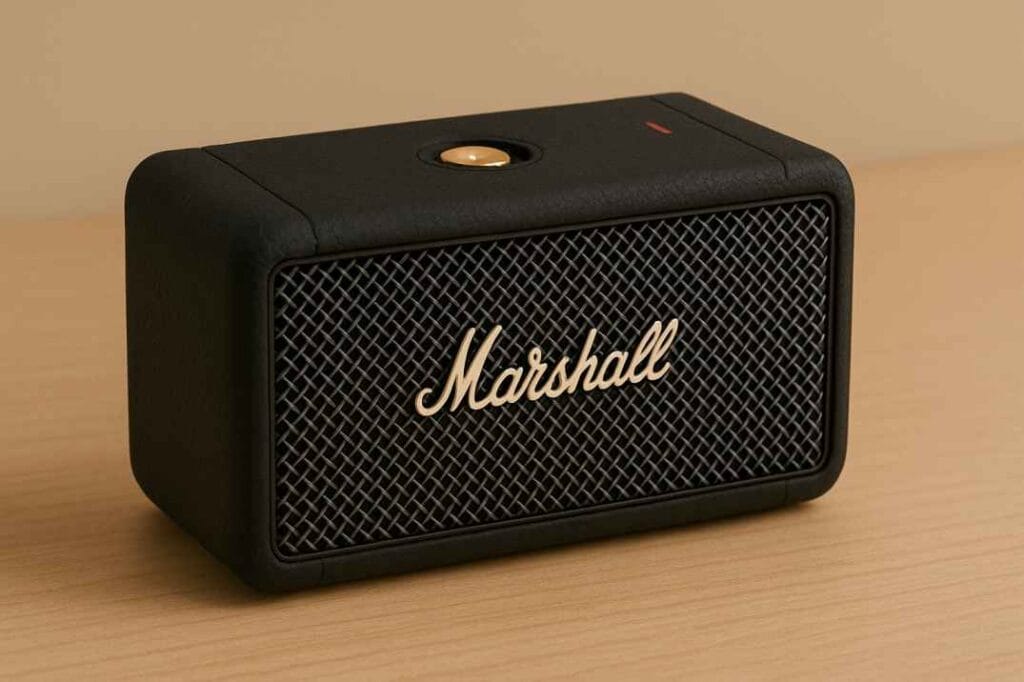
In a world of anonymous black cylinders and rubberized pucks, a Marshall Bluetooth speaker makes a statement before you even press play. The brand’s iconic amplifier-inspired design, complete with brass knobs and textured vinyl, stands out in a sea of minimalist tech. But in the fiercely competitive portable audio market, where does Marshall stand? Are you paying for a piece of rock and roll history, or does the performance deliver a genuine encore? As a tech journalist who has tested hundreds of speakers, I’ve spent months with Marshall’s 2025 lineup to separate stagecraft from substance. This review cuts through the aesthetic appeal to answer the critical question for global shoppers from New York to New Delhi: does a Marshall speaker belong in your home, or is it merely a beautiful background prop?
The Marshall Ethos in a Wireless World
The Marshall Bluetooth speaker enters a market projected to grow to over $31 billion globally by 2032, driven by streaming services and our desire for portable, high-quality sound. While giants like JBL and Bose compete on features such as waterproof ratings and AI sound optimization, Marshall takes a different path. Its strategy is rooted in heritage. The design is an unapologetic tribute to the company’s guitar amplifiers, a calculated move in an era where personalization and aesthetics are significant market drivers.
This approach creates a unique niche. For many, a speaker is not just an audio device but a piece of home decor and a personal statement. Where a Sonos or an Ultimate Ears speaker might disappear into a room, a Marshall Kilburn III demands to be seen. It trades the ubiquitous fabric mesh for a woven grille, physical knobs for touch controls, and anonymous branding for a bold, scripted logo. This isn’t just a speaker; it’s a lifestyle accessory that resonates with consumers who value retro aesthetic and tangible controls in an increasingly digital world.
Lineup Overview: From Emberton to Kilburn
Marshall’s portable range is tiered by size, power, and price, offering a distinct model for different needs.
- Emberton III: The compact entry-point. It’s a rugged, IP67-rated speaker built for mobility, featuring Marshall’s 360-degree “Stereophonic” sound. Recent updates include a longer battery and a built-in microphone for calls.
- Willen & Middleton: The ultra-portable Willen and the more powerful Middleton fill the middle ground, with the latter often praised as a robust, balanced option.
- Stockwell II: Positioned as a portable home speaker, it blends domestic aesthetics with a built-in battery. It features more detailed EQ controls but has faced criticism for sound performance relative to its price.
- Kilburn III: The flagship portable. It’s a larger, statement piece for the home that can be moved, boasting a stereo driver setup, a massive battery, and that signature vintage look that makes it a conversation starter.
Specifications at a Glance
Table: Marshall’s 2025 Portable Speaker Lineup Compared
| Model | Key Driver Setup | Battery Life (Claimed) | Water/Dust Proof | Weight | Notable Features |
|---|---|---|---|---|---|
| Emberton III | 2 x 2″ Full-Range | Up to 32 hours | IP67 | 0.7 kg | 360° Sound, Built-in Mic, Auracast-ready |
| Stockwell II | 2 x 2.5″ Drivers | ~25 hours | Not officially rated | 1.4 kg | 3-band Analog EQ, USB-C Phone Charging |
| Kilburn III | 2 x 2″ Tweeters, 1 x 4″ Woofer | ~50 hours | Not officially rated | 3.0 kg | Stereo Sound, Bass/Treble Knobs, App EQ, Carry Strap |
Performance Deep Dive: Sound, Battery & Usability
Sound Signature: More Rock than EDM
The sound of a Marshall Bluetooth speaker is as distinctive as its look. The tuning is decidedly “Marshall”: mid-forward, with clear, present vocals that cut through a mix, making it excellent for guitar-driven rock, indie, and podcasts. The analog knobs for bass and treble provide immediate, satisfying adjustment.
However, this focus comes with trade-offs. Critics and tests note that some models, like the Stockwell, can exhibit “anemic and weak low end” and struggle with distortion at high volumes when handling deep, sustained electronic basslines. The larger Kilburn III, with its dedicated woofer, performs better but still prioritizes a lively, forward character over neutral flatness or room-shaking sub-bass. If your playlist is dominated by hip-hop or EDM, this signature may leave you wanting.
Battery Life: A True Strength
Where Marshall consistently excels is endurance. The claims are not marketing hyperbole. The Kilburn III’s staggering 50-hour battery life is a genuine weekend-long asset, while the Emberton III’s 32 hours easily outlasts many competitors. This makes them fantastic for long gatherings, weekend trips, or simply avoiding the constant charger hunt.
Connectivity & App Experience: Deliberately Simple
Don’t expect extensive smart features. These are Bluetooth-first speakers. There’s no Wi-Fi, no native voice assistant, and multi-room audio is limited to basic stereo pairing or newer Auracast functionality. The Marshall Bluetooth app is minimal, offering firmware updates, a few EQ presets, and battery management. For users who crave simplicity—just pick a device, connect, and play—this is a benefit. For those embedded in smart home ecosystems, it’s a notable omission.
Design & Build: The Iconic Look, Examined
The design is the primary selling point, and its execution is largely superb. The textured vinyl, sturdy metal grille, and silky-smooth brass-plated knobs create a tactile, premium feel that plastic competitors can’t match. The physical controls are intuitive for all ages, a stark contrast to cryptic touch panels.
Yet, functionality can sometimes take a backseat. The Stockwell’s front grill has been criticized for seeming less durable, and some find the control layouts quirky (offering treble adjustment but no track-skip button). The Kilburn III is also notably heavy, making it “more of a home speaker” you might move occasionally rather than a true travel companion.
The Balanced Verdict: Pros and Cons
Pros:
- Unmatched Aesthetic: Iconic, conversation-starting design that doubles as decor.
- Superb Battery Life: Class-leading endurance across the lineup.
- Tangible, User-Friendly Controls: Analog knobs provide immediate, satisfying adjustment.
- Strong Mid-Range & Vocals: Excellent for rock, folk, podcasts, and vocal-forward music.
- Build Quality: Generally robust with premium materials like vinyl and metal.
Cons:
- Bass Limitations: Some models lack deep, powerful low-end and can distort at high volumes.
- Limited Smart Features: No Wi-Fi, voice assistants, or advanced multi-room systems.
- Portability Trade-offs: Heavier designs and not all models are fully waterproof.
- Premium Pricing: You pay a significant premium for the design and brand heritage.
- Polarizing Sound: The colored, mid-forward signature may not suit all musical tastes.
Key Alternatives: How Marshall Stacks Up
Choosing a Marshall Bluetooth speaker often means prioritizing design. Here’s how it compares to top-rated alternatives for different priorities.
- For the Audio Purist: The Bang & Olufsen Beosound A1 (3rd Gen) or Minirig 4.0 are compelling. The B&O offers stunning design with a refined, detailed, and balanced sound profile, though at a even higher price. The Minirig is a no-frills powerhouse renowned for its loud, clean, and bass-rich output from a small chassis.
- For Rugged Portability: The Ultimate Ears Wonderboom 4 (our top pick for durability) or JBL Flip 7 are kings. They offer superior waterproofing (IP67/IP68), are lighter, more durable for true outdoor abuse, and often cost less.
- For Smart Home Integration: The Sonos Era 100 operates in a different league. It’s a Wi-Fi-first speaker with brilliant multi-room capabilities, voice control, and superior sound staging, though it requires power and is less “portable”.
Table: Marshall vs. Key 2025 Competitors
Who Should Buy (And Who Should Skip)
You Should Buy a Marshall Bluetooth Speaker If:
- You value design and aesthetics as much as, or more than, pure sonic specifications.
- Your music taste leans toward rock, acoustic, indie, or podcast listening.
- You want long battery life for extended, cord-free use.
- You prefer simple, analog controls over smartphone apps and voice commands.
You Should Look Elsewhere If:
- Deep, accurate bass is your top priority (e.g., for hip-hop, EDM, or movie scores).
- You need a fully waterproof, dustproof speaker for the beach, pool, or trail.
- You want seamless integration with a smart home (Google Assistant, Alexa, Apple Home).
- Your primary goal is the best possible sound quality per dollar spent.
The Value Proposition for 2025-2026
In terms of pure sonic performance per dollar, Marshall speakers are hard to justify. You can often get louder, clearer, or more bass-heavy sound for less money from brands like JBL, Sony, or Anker.
The value of a Marshall Bluetooth speaker is intangible. It’s in the joy of turning a physical knob, the compliments from guests, and the way it complements a room’s decor. It’s a product where emotional and aesthetic design currency holds significant weight. For the right buyer, this is worth a 20-30% premium over a sonically comparable but bland alternative. As the market continues to grow, with a major segment of consumers under 44 driving demand for personalized tech, Marshall’s strong identity positions it well, albeit in a specific, style-conscious niche.
Frequently Asked Questions (FAQ)
1. Are Marshall Bluetooth speakers waterproof?
It depends on the model. The Emberton III and Willen carry an IP67 rating, meaning they are fully waterproof and dustproof. However, larger models like the Stockwell II and Kilburn III are not officially rated for waterproofing and are better suited for indoor use or protected outdoor areas.
2. How is the battery life in real-world use?
Excellent. Marshall’s battery claims are generally accurate. In real-world testing at moderate volumes, the Kilburn III can easily deliver over 40 hours, and the Emberton III reliably hits close to 30 hours. This is one of the brand’s most consistent strengths.
3. Can I use two Marshall speakers together for stereo sound?
Yes, but the feature set varies. Newer models like the Emberton III are Auracast-ready, allowing for future multi-speaker broadcasting. You can typically pair two of the same model in stereo mode using the Marshall Bluetooth app, though it’s not as robust as the dedicated multi-room systems from Sonos or Bose.
4. Is the sound quality good for the price?
This is the core trade-off. If you judge purely on sound quality metrics like clarity, bass extension, and loudness, other brands often offer better performance for the same price. You are allocating a portion of your payment to the iconic design, brand heritage, and build materials. For many, this is a worthwhile exchange.
5. Who makes Marshall speakers?
Marshall Amplification is a British company founded in 1962. The consumer electronics division (headphones and speakers) was spun off into the Marshall Group, which is a separate entity but operates under license to use the iconic Marshall branding and design language.
Final Recommendation
After extensive testing, the Marshall Bluetooth speaker is not an automatic recommendation for every buyer, but it is an easy and passionate recommendation for its specific audience.
If you see a speaker as merely an audio tool, buy a JBL Charge 6 or an Ultimate Ears Wonderboom 4. You’ll get more features and often better all-round sound for your money.
However, if you view technology as an extension of your personal style, if you appreciate tactile controls and vintage aesthetics, and if your listening habits favor the genres that Marshall’s sound signature flatters, then the purchase is justified. The Kilburn III is the star for home-centric use, while the Emberton III is the choice for stylish portability.
Ultimately, Marshall succeeds not by winning spec sheets but by creating products people form an emotional connection with. In a crowded market, that remains a powerful—and valuable—feat.
Pingback: Oppo Earphone Review 2025: Global Expert Test & Long-Term Advice | GadgetWallah.com - Gadget Wallah
Pingback: Google Pixel 8 Review: AI Camera, 7-Year Support & Is It Worth It?