
Introduction
In the crowded world of portable audio, few brands command the instant recognition and trust that JBL does. For years, their lineup of rugged Bluetooth speakers has been the go-to choice for beach days, backyard gatherings, and outdoor adventures worldwide. But with models ranging from the pocket-sized Clip to the powerful Boombox, choosing the right one can be confusing. Is the premium JBL Xtreme 4 worth the investment over the popular Charge 6? Does the ultra-portable Flip 7 sacrifice too much sound? This isn’t just about specs; it’s about matching a speaker’s capabilities to your real life. As a tech journalist who has tested countless audio gadgets, I’ve seen how the right speaker can elevate everyday moments. This guide cuts through the marketing to provide a clear, honest, and practical comparison of JBL’s 2025 portable lineup. We’ll analyze sound, battery life, durability, and the smart features that matter, helping you make an informed decision that you’ll be happy with for years to come. Let’s find the JBL speaker that’s perfect for you.
Understanding JBL’s 2025 Speaker Lineup
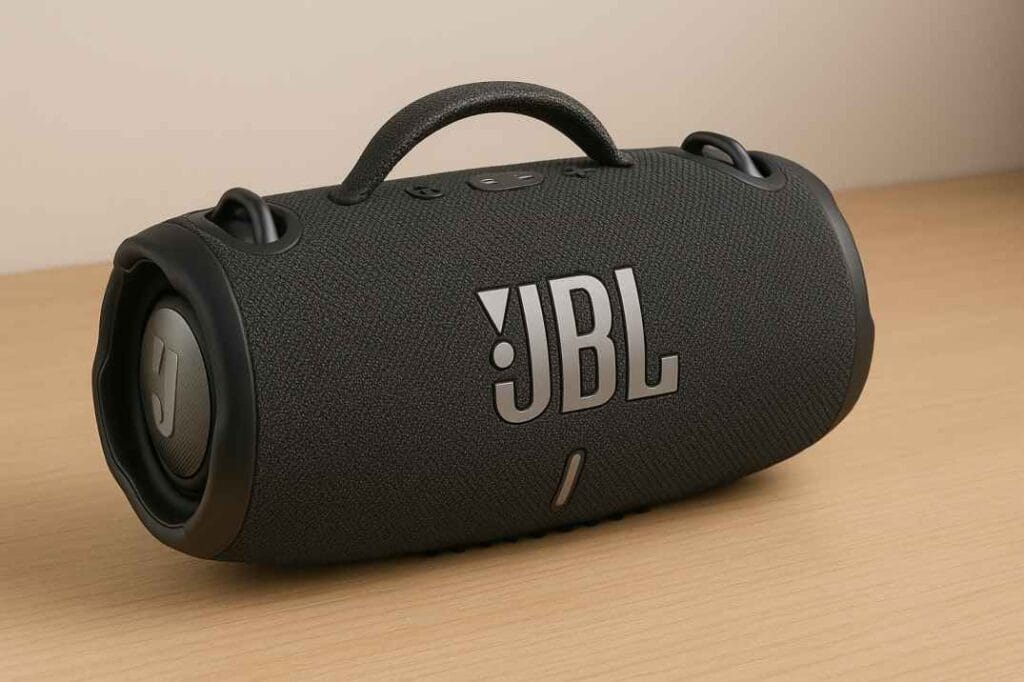
JBL’s strategy is built on a clear, tiered ecosystem. At the core of their 2025 Bluetooth speaker range are three pillars: power, balance, and portability. The flagship JBL Xtreme 4 represents the ultimate portable party machine, designed for those who prioritize room-filling sound and marathon battery life above all else. A step down, the JBL Charge 6 is arguably the heart of the lineup—a versatile all-rounder that What Hi-Fi? calls “as good a sound as you can get in a portable Bluetooth speaker for around £150/$150”. Finally, the JBL Flip 7 is the champion of compact portability, a “burrito”-shaped speaker that delivers impressive sound for its minimal size and weight.
Beyond these core models, the lineup expands. The tiny JBL Go 4 is for true minimalists, the JBL Clip 5 adds a carabiner for ultimate on-the-go attachment, and the massive JBL Boombox 3 exists for those who want to move the party to the park. A key trend for 2025 is the transition to Auracast™ technology, a new wireless standard replacing JBL’s older PartyBoost. This allows for easier, more stable pairing of multiple speakers from different brands, future-proofing your purchase.
Detailed Model Breakdown & Specifications
To make an informed choice, you need to look beyond marketing slogans. Here is a detailed breakdown of the three cornerstone models in JBL’s 2025 portable range.
JBL Xtreme 4: The Powerhouse
The JBL Xtreme 4 is built for dominance. It features a formidable driver setup with two 70mm woofers and two 20mm tweeters, powered by a total of 100W (80W on battery). This hardware delivers what JBL calls “next-level massive JBL Pro Sound”. Unlike smaller speakers, it includes a convenient integrated shoulder strap, recognizing that you’ll be carrying its 2.1kg (4.63 lbs) weight for extended periods. Its party trick is a colossal 24-hour battery life, extendable by 6 hours with a Playtime Boost feature, and it can even charge your devices via a built-in power bank.
Here are the key specifications for the JBL Xtreme 4:
JBL Charge 6: The Versatile All-Rounder
The JBL Charge 6 is the sweet spot. It houses a newly developed woofer and a 20mm tweeter powered by 40W of total output. The major upgrade from its predecessor is the inclusion of AI Sound Boost, an algorithm that analyzes music in real-time to maximize output and minimize distortion. It boasts an impressive IP68 rating, meaning it’s not just waterproof but also fully dustproof and can survive drops from up to 1 meter. Its signature “Charge” feature is a power bank to top up your phone, and it supports lossless audio playback when connected via its USB-C port.
JBL Flip 7: The Compact Champion
The JBL Flip 7 is the definition of portable potency. It uses a single woofer and tweeter combo powered by 35W. Weighing just 560g, it’s designed to be carried anywhere, and it now also features an IP68 rating for maximum durability against the elements. It supports the same Auracast™ and AI Sound Boost tech as its bigger brothers, and for the first time in the Flip series, it offers lossless audio over a USB-C wired connection. Battery life is rated at a solid 14 hours, extendable by 2 hours with Playtime Boost.
Real-World Performance & Key Features
Specs tell only half the story. How do these speakers actually perform where it matters?
Sound Quality & AI Sound Boost: Across the 2025 lineup, JBL Pro Sound is enhanced by AI Sound Boost. In practice, this isn’t a gimmick. On the Charge 6, it results in a “clearer and more detailed” sound with vocals that have “extra solidity and textural depth” compared to older models. The Xtreme 4 uses its AI to manage its powerful drivers, producing a sound that is surprisingly refined—”clear and consistent with plenty of detail”—rather than just being a blunt, bass-heavy instrument.
Durability & Design (IP Ratings): JBL’s rugged reputation is well-earned. The IP67 rating on the Xtreme 4 means it can be submerged in 1 meter of water for 30 minutes, making it immune to poolside splashes or rain. The IP68 rating on the Charge 6 and Flip 7 goes a step further, offering superior protection against fine dust and sand, which is crucial for beach or camping trips. The Flip 7’s cylindrical, fabric-wrapped design is particularly adept at being tossed in a bag without worry.
Battery Life & Connectivity: Real-world battery is often less than the maximum rating, which depends heavily on volume. However, JBL’s Playtime Boost is a useful, on-demand feature that tweaks performance to squeeze out more hours when you need them. The move to Auracast™ is significant. It simplifies connecting multiple speakers (like two Xtreme 4s for stereo or a mix of compatible JBL models) and is poised to become a broader industry standard.
Head-to-Head Comparison & Alternatives
Choosing between models often comes down to direct comparisons and knowing what the competition offers.
JBL Xtreme 4 vs. Charge 6: This is a classic power vs. value debate. The Xtreme 4 offers significantly louder, more expansive sound and double the battery life, making it ideal for multi-day trips or large outdoor spaces. The Charge 6, however, is far more portable, nearly as durable (with a higher IP68 rating), and costs considerably less. For most people hosting gatherings in a backyard or park, the Charge 6 is sufficient. The Xtreme 4 is for those who regularly need to fill a very large space with sound.
JBL Charge 6 vs. Flip 7: Here, the trade-off is sound scale versus size. The Charge 6 delivers deeper bass and more powerful, room-filling audio. The Flip 7 is the choice if your top priority is to minimize size and weight without completely sacrificing sound quality. What Hi-Fi? notes it’s “bassier than before, with a smoother, more refined profile”.
Key Alternatives from Other Brands:
- Bose SoundLink Max: The closest rival to the JBL Xtreme 4. It’s often praised for a more premium design and sound signature, but the Xtreme 4 frequently has an edge in raw battery life and features like Auracast™ support.
- Sony ULT Field 5: A powerful alternative in the large portable category, known for its unique “ULT” bass boost button and party lighting features.
- Soundcore Motion Boom 2 (by Anker): A strong value competitor to the JBL Charge 6, often offering similar power and features at a lower price point.
Buying Advice: Who Should Buy What?
Your perfect JBL Bluetooth speaker depends entirely on your lifestyle.
You should buy the JBL Xtreme 4 if:
- You regularly host parties outdoors or in large spaces.
- All-day (and night) battery life is non-negotiable.
- You don’t mind the larger size and weight (2.1kg) for a major boost in audio power.
- Ideal User: The outdoor entertainer, the camp counsellor, the person who wants one powerful speaker to rule their backyard.
You should buy the JBL Charge 6 if:
- You want the best balance of sound quality, portability, and price (it’s our top overall pick).
- You need a versatile speaker for the beach, picnics, and around the house.
- The ability to charge your phone (power bank) is a valuable feature.
- Ideal User: The active, social all-rounder who wants one reliable speaker for almost every scenario.
You should buy the JBL Flip 7 if:
- Portability is your #1 concern. You want great sound that fits in a bicycle bottle holder or backpack side pocket.
- Your listening is mostly for personal enjoyment or small groups in intimate settings.
- You want a lighter, more affordable entry point into JBL’s premium sound.
- Ideal User: The hiker, biker, student, or urban dweller with limited space.
A note on value: Don’t automatically dismiss the previous generation, like the JBL Charge 5. As stocks clear, it can be found at a significant discount and remains an excellent speaker, though it lacks the newer AI Sound Boost and Auracast™ features.
Frequently Asked Questions (FAQs)
Can I connect my JBL speaker to a non-JBL Bluetooth speaker?
Typically, you cannot directly connect a JBL speaker to a speaker from another brand (like Bose or Sony) via standard Bluetooth pairing. However, the new Auracast™ technology in 2025 models like the Xtreme 4 and Charge 6 is designed to become a universal standard. While still emerging, its goal is to eventually allow this kind of cross-brand connectivity.
Is it safe to leave my JBL speaker plugged in all the time?
Yes. According to JBL, modern electronics include safeguards that make it “entirely safe to leave your speakers plugged in all day and overnight, even once it is fully charged”. The battery management system prevents overcharging.
How do I pair two JBL speakers for stereo sound?
With newer models featuring Auracast™ (Xtreme 4, Charge 6, Flip 7), you typically use the JBL Portable app. The app will guide you to pair two of the same model to create a dedicated left and right stereo channel. Older models use the JBL Connect+ or PartyBoost buttons on the speakers themselves.
What does the IP67 or IP68 rating mean for my speaker?
The IP (Ingress Protection) rating indicates resistance to solids and liquids. The first digit (6) means total protection against dust. The second digit (7 or 8) refers to water resistance. IP67 means the speaker can withstand immersion in 1 meter of water for 30 minutes. IP68 means it can withstand immersion beyond 1 meter (conditions specified by the manufacturer, often 1.5m for 30 minutes). Both are more than sufficient for rain, pools, and beaches.
Does the JBL Charge 6 come with a charging cable?
No. In an effort to reduce electronic waste, JBL no longer includes a USB charging cable in the box with the Charge 6, as they assume most users already have one. The Xtreme 4, however, does include a cable.
Final Verdict & Recommendation
After analyzing the specs, performance, and real-world use cases, one model stands out as the most universally recommendable JBL Bluetooth speaker for 2025: the JBL Charge 6. It hits the perfect equilibrium. It delivers powerful, clear, and distortion-managed sound that can easily handle a backyard gathering, yet it remains compact enough to be a true travel companion. Its best-in-class IP68 durability, phenomenal 24+ hour battery, and practical power bank function make it incredibly versatile. While the JBL Xtreme 4 is the undisputed king of volume and battery for large-scale events, and the Flip 7 is the ultra-portable champion, the Charge 6 successfully brings 80% of the Xtreme’s performance in a much more manageable and affordable package.
Final Advice: Your money is best spent on the Charge 6 if you want one speaker to do it all brilliantly. Spring for the Xtreme 4 only if your primary use is loud, prolonged outdoor entertaining. Choose the Flip 7 if minimal size is your ultimate deciding factor. No matter which you choose, JBL’s 2025 lineup, with its robust build and enhanced sound tech, offers some of the most reliable and enjoyable portable audio on the market.
Pingback: Marshall Bluetooth Speaker Review 2025: Sound, Design & Value Verdict | GadgetWallah - Gadget Wallah
Pingback: How to Change iPhone Password, Easy Reset & Ultimate Security Guide - Gadget Wallah